Magnetic Fields Nomads
MAGNETIC FIELDS NOMADS










Sound, archives, moving image and immersive digital environments converge in a musical dialogue. A performance featuring Murthovic, Thiruda, Gopika Jairam, Sawai Khan Manganiyar, Roshan Khan Manganiyar, Jakir Khan Manganiyar & Dilip Khan Manganiyar

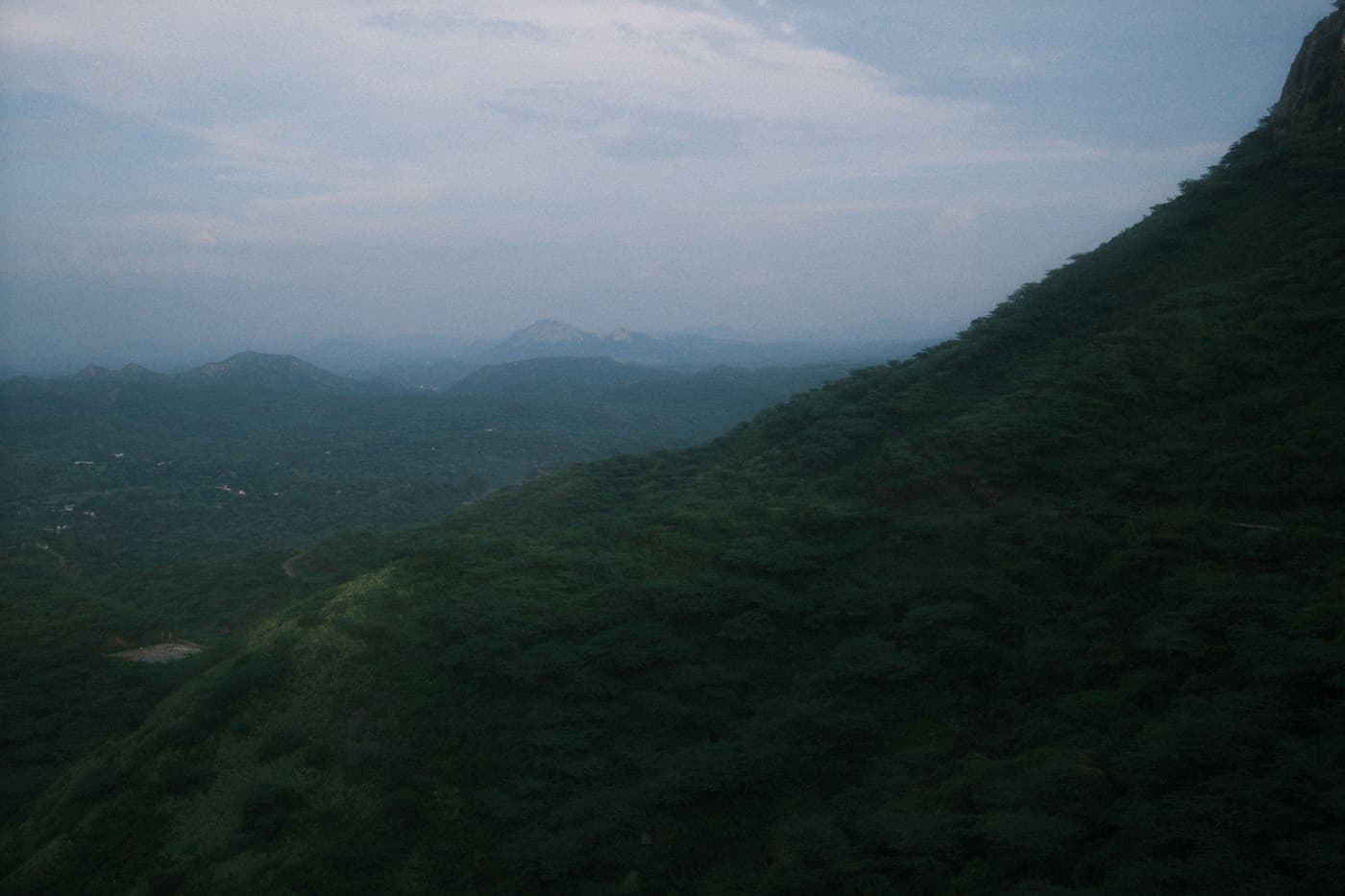
Jal Jungle Zameen (Water, Forest, Land) is a 60-minute live electronica performance that excavates Indian ecological heritage through sound, moving image, and immersive digital environments. The iteration for Nomads marks a distinctive convergence: the transmedia architecture of Elsewhere in India meets the living vernacular music traditions of Rajasthan's hereditary musician communities.
The performance reframes climate discourse by tracing ecological narratives from pre-colonial philosophies of interconnectedness through the ruptures of empire to contemporary grassroots resilience. Rajasthan becomes both archive and oracle – a geography where water scarcity forged architectural genius, where faith manifested as conservation, and where communities developed sophisticated climate adaptation strategies that predate modern environmentalism by centuries.
The work asks: What if the future isn't about conquering scarcity, but learning from those who've thrived within it for millennia?
The collaboration between Murthovic, Thiruda and Manganiyar musicians Gopika Jairam, Sawai Khan Manganiyar, Roshan Khan Manganiyar, Jakir Khan Manganiyar & Dilip Khan Manganiyar operates in hybrid states: moments where Murthovic's electronic compositions provide spacious beds for acoustic instruments to breathe, sections where folk melodies are sampled and transformed in real-time, and chapters where traditional and electronic music exist in productive tension.
The visual landscape of the performance draws from the newly digitised archives of British Film Institute and Elsewhere In India's own ethnomusicological documentation in Rajasthan.
The interplay between colonial archives and contemporary community documentation creates productive friction: whose stories were recorded, whose were erased, and how can digital tools help communities reclaim and reimagine their own heritage narratives?
Jal, Jungle, Zameen is Supported by British Film Institute - 'India on Film: 1899 – 1947'